Jean Dubuffet was a french artist and sculptor, who had his own ideals about aesthetics embraced 'low art' and avoids traditional standards of beauty, he instead believes in more authentic and humanistic approach of approach of image-making.
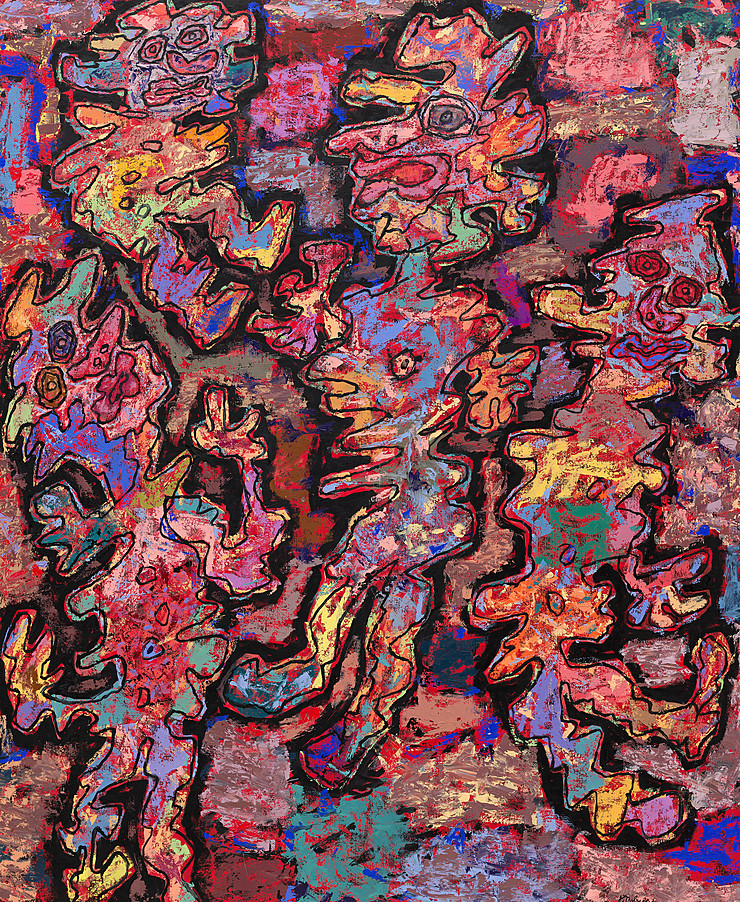
Many of his works are painted in oil paint using straw, sand and tar in impasto (where paint is laid on the canvas very thickly, up to the point where brush strokes can are visible - so when dry is gives a great amount of 3D texture to the painting.) For Dubuffet crudely painted features made his painting more perceptive than any other work that has great amount of technically finished work. It has often been commented that the way he creates his work you can see his rebellious character and his mocking sense of humor.
 |
| "Ponge Feu Follet Noir" |
 |
| "Automoblie a la Route Noire" |
 |
| "Astravagal" |
 |
| "Propitious Moment" |
 |
| "Site Inhabited by Objects" |
In sculpture he has used polystyrene which he then painted with vinyl paint, he often preferred to use ordinary materials as paper-mache so he could model very fast and switch easily from one work to another like sketches on paper.
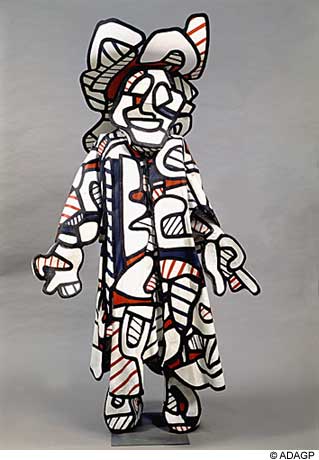


Dubuffet referred and called his work "Art Brut" which means "Raw Art" or "Outsider Art" for art produced by non-professionals/those outside of the art scene who work outside the norms of aesthetics, for example art done by psychiatric patients, prisoners and children. Dubuffet wanted to create art that didn't take great concern from deep intellectual concerns and wanted to create art outside the boundaries of the official culture. Along with Art Brut he also promoted "Anti-Art" which was from the Dadaists during WW1, as the also tried to discredit traditional concept of Art, but many post-WW2 shared his his ideas but weren't as interested by the truth that could be revealed by unrefined art.
Dubuffet was not only interested in paintings by children and other non-professionals but he wanted to paint like them, lines and marks that had simple carefree meanings behind them - that the spontaneous art children created was more true to real emotions then paintings that were created for the purpose of gaining an emotional response.

No comments:
Post a Comment