Abstract Expressionism was a variety of people and artists that broke into there own way of voice and manner in painting and focused on the individuals way of communicating with the world - since 1945 onward everyone was looking for a sense of salvation, saving themselves at a dreadful time and landscape.
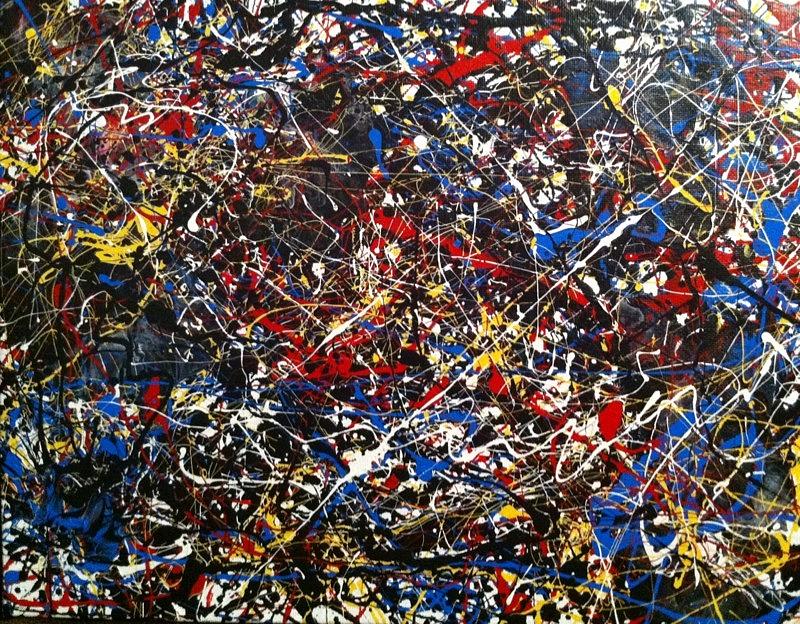
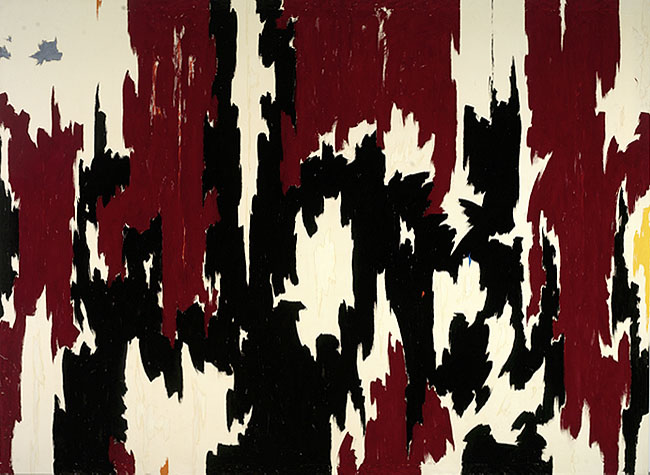
They painted on a large scale to let the viewer be a part of a and in a painting and the environment that the artist created inside the canvas, the compositions that the Abstract Expressionist used was considered an "All-Over-Composition" which means that the entire composition is the image and everything inside the painting was important - the whole point of it was to keep the viewers eyes constantly moving over and across the painting, just like how the artists moved when they were painting the work.
After the end of the second war the England had a Festival of Britain which was a post war celebration for all in England which was used to take peoples mind of the bleak situation that we were in at the end of the war, rations were still being used, household goods were bleak and boring and so England had to rebuild after the destruction from the Blitz. We had to paint a better, brighter and promising future to boost morale of the country and so there was a big boost in new household deigns with bold and bright colours and everything was designed to make compact.
Panic started over war again when the Cold War started with the appearance of Communist governments appearing everywhere and the paranoia of war since it wasn't long front he second World War ended - British get evolved in both S Korean war.
American influence from the solders coming over during the end of the second world war.
Artist
Jackson Pollock was one of the first Abstract Expressionist had a very aggressive drunk side to him that was very self destructive and always questioned WHO he was and what his status was. He was called a "Wild Painter" since he painted on the floor in a barn and with household paints - but the reality was that he painted very carefully, using expensive paints and planned it out, having to layer up the colours after them drying over some time.
Pollock was a shy character that didn't take well to criticism due to his depression and anxiety, he didn't enjoy the art scene and wasn't a showman with his work and found the fame that came with the discovery of his work too much.


William De Kooning


Franz Kline


Mark Rothko
Robert Motherwell


Clifford Still


My Thoughts
I think out of all the movements we have looked at so far this has been my favourite - which has really surprised me since I typically hate abstract work but after looking at them in more depth I really like the expressiveness in the work.
Why have we looked at this?
To understand what motivated the Abstract Expressionist to paint the way they did and how they were effected by the times and how they used that to express themselves widely about their own individual response on the canvas.
What do I know now about this that I didn't before?
1. How design and colour was used to help boost morale of the public by creating new and exciting objects
2. I understand much more about the meaning behind the Abstract Expressionists then before
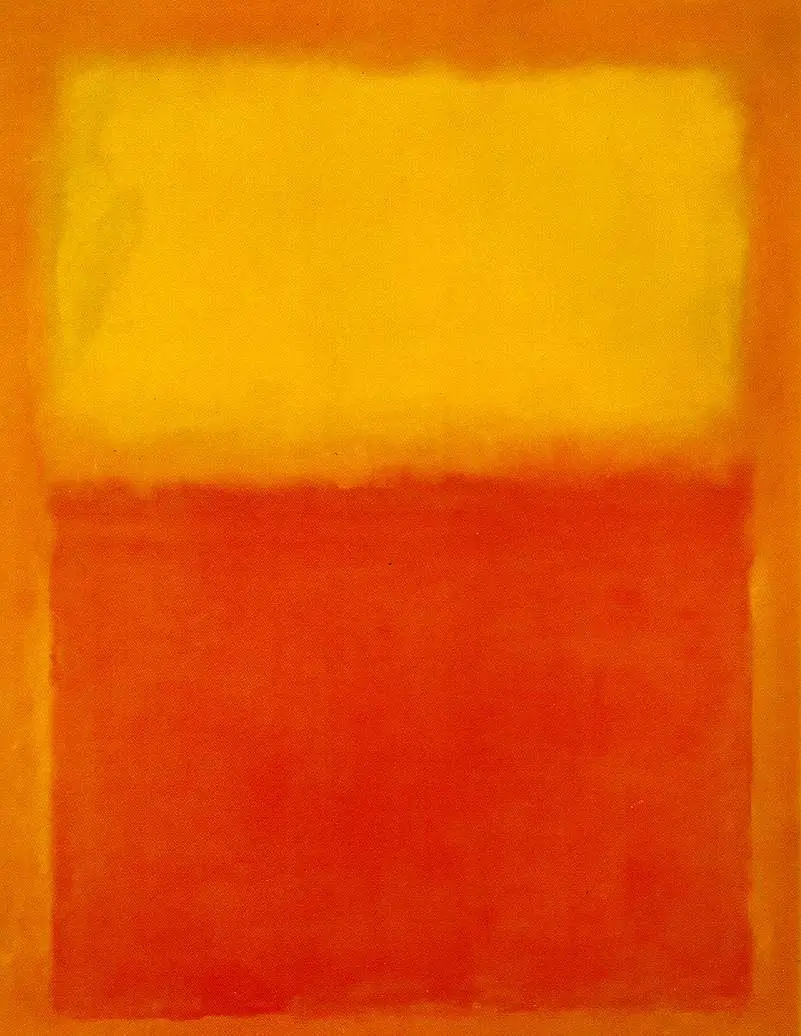
3. I quite like their work - unlike before when I hated it, but not Rothko I still don't like him.
4. Slowly getting better with connecting with movements together

No comments:
Post a Comment